Windsor dental marketing mistakes
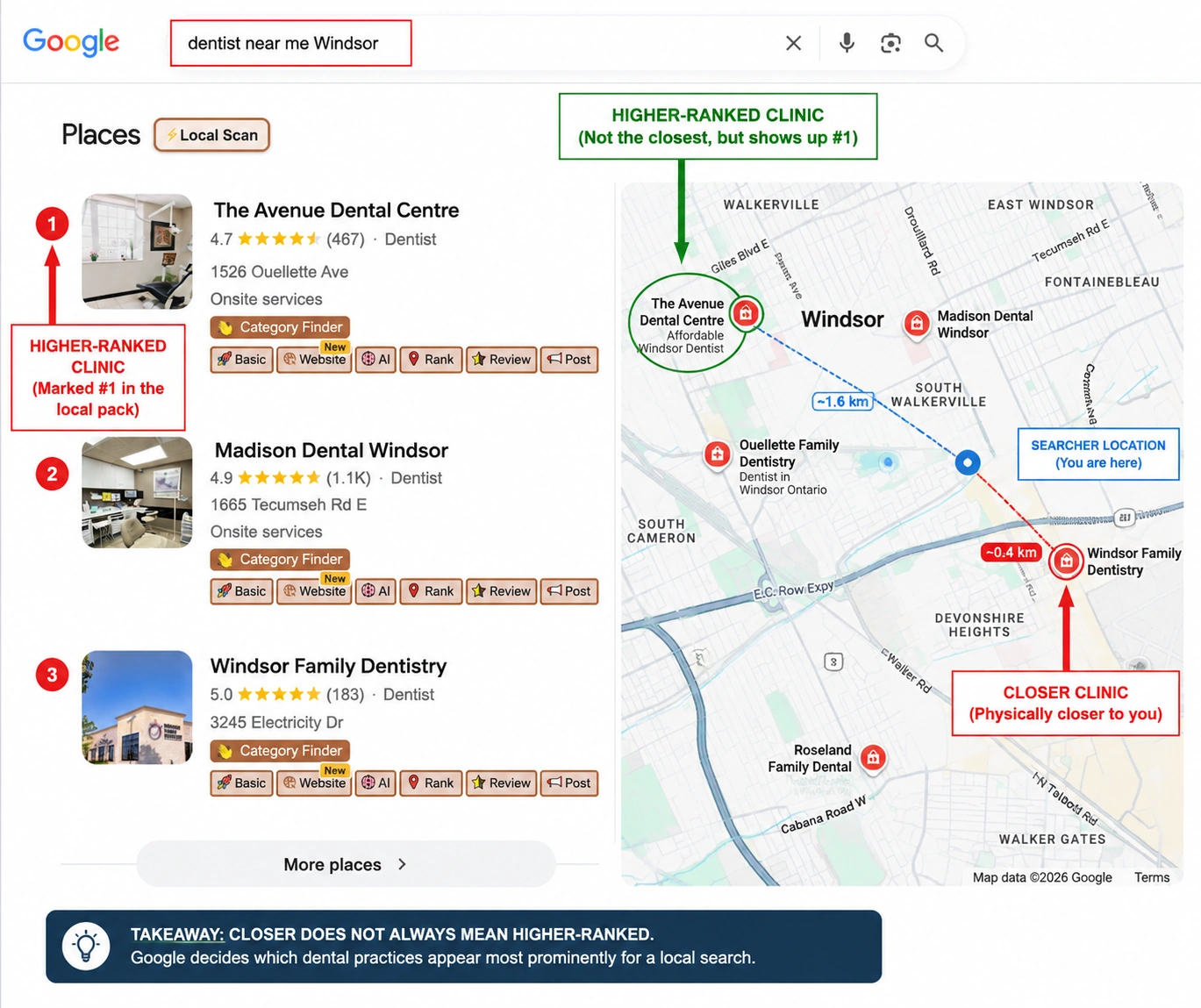
A clean website and a few ads are not enough anymore. In Windsor, the practices that keep pulling new-patient calls are the ones that show up clearly in Google, answer the right questions on their site, and make booking feel easy on mobile.
This is where many clinics get stuck. They are good practices, but their online setup sends mixed signals. The result is lower visibility, weaker calls, and a front desk that spends too much time sorting the wrong leads.
This is not a branding problem alone. It is a visibility and conversion problem.
DIY overload
Many dentists try to juggle the website, Google Business Profile, reviews, social posts, and occasional ads between patients. That usually works for a month or two, then small issues pile up. A broken form, stale page title, missing service page, or weak review flow starts costing calls quietly.
The problem is not effort. It is bandwidth. Most owners already have enough on their plate with staffing, recalls, insurance pressure, and case acceptance. Marketing gets handled in fragments, and fragmented work rarely produces strong local results.
What gets missed
- Old pages that no longer match how patients search
- Weak internal linking between high-intent pages
- Slow mobile pages with hidden tap-to-call buttons
- Google profile sections left incomplete for months
Cheap SEO trap
The cheapest SEO option often looks fine at first because the report sounds busy. Rankings, backlinks, citations, and content all get mentioned. The issue is whether any of that work matches how real Windsor patients search.
Low-cost providers often push thin service pages, generic city swaps, or weak links that do not build trust. A few months later, the clinic still does not rank for the terms that matter most. The money was spent, but the search intent was never matched.
- Copy-paste pages with city names swapped in
- Backlink reports with no local relevance
- Ranking updates with no call-quality insight
- Clear page strategy around actual dental intent
- Windsor-specific content and service framing
- Reporting tied to calls, clicks, and page performance
Full chair, weak future
Some clinics assume they do not need SEO because the schedule is already full. That can feel true until a dentist leaves, hygiene openings grow, or a newer practice starts outranking you for local intent. Search demand does not stop because your current week looks fine.
This shows up first in urgent searches. A patient with pain is not going to browse ten websites. They act fast, and Google usually decides who gets that call. That is why high-intent pages tied to Windsor emergency dental searches matter even for practices that are already busy. Visibility protects future demand, not just today’s chair time.
2018 website problem
Old websites rarely fail in one dramatic way. They fail in little ways that add up. The phone number is harder to tap, the forms feel clunky, the pages load too slowly on mobile, and the content sounds dated. None of that helps a nervous patient book.
Windsor search traffic is heavily mobile. Parents are searching between pickups, commuters are checking options from the car, and urgent patients are not waiting around for a slow page. If the site feels stale or hard to use, the next clinic gets the call.
Three-minute check
- Load the homepage and one service page on a phone
- Tap the phone number without zooming in
- Try the form like a real patient would
- Check whether the page feels usable within a few seconds
Offline-only mindset
Mailers, community sponsorships, and referrals still matter. The mistake is treating them as enough on their own. Today’s patient often hears your name offline, then validates you online before calling.
That is especially true for elective care. Someone comparing aligners after work is likely to search, compare, and read before they ever fill out a form. Pages built around Windsor Invisalign demand help capture that second step, when interest turns into real comparison.
Ads without organic
Paid ads can help, especially for promotions or faster lead flow, but they are not a replacement for organic visibility. Once the budget stops, the coverage disappears. Organic pages, good reviews, and a strong Google profile keep working long after a single campaign ends.
The stronger play is balance. Use ads where speed helps, but build the site and profile so the practice can still attract demand without renting every click.
Half-built GBP
A half-filled Google Business Profile is still one of the easiest ways to lose local trust. Missing services, old hours, weak photos, and no recent activity make a clinic look less current than it really is. That affects both rankings and patient confidence.
This becomes even more important when comfort and fit matter. Patients looking for help with anxiety or more manageable visits are often scanning quickly for clues about the kind of office they are calling. That is part of why service-specific searches tied to Windsor sedation options need strong profile language, relevant photos, and clear service pages.
Quick video
This short fits here because Google Business Profile photos and profile quality shape trust fast. A stronger photo setup can help your listing feel more current, credible, and clickable.
GBP basics that still move the needle
- Accurate hours and service list
- Fresh photos of the office and team
- Consistent review requests and replies
- Short updates that show the profile is active
No coverage clarity
Many dental websites still treat payment and eligibility questions like side details. Patients do not. For a lot of families, that is the first filter, not the last one. If a clinic is vague about programs, direct billing, or next steps, the call often never happens.
That is why searches tied to Windsor CDCP participation are not side traffic. They are high-intent local demand. When the site explains fit clearly, the practice gets fewer dead-end calls and more patients who already understand what to ask.
No trust pages
Patients want to know who they are calling. A website with no team bios, weak doctor pages, or generic service copy feels interchangeable. That hurts conversion, especially for cosmetic care, anxious patients, and families choosing a provider for the first time.
The best-performing sites usually answer the practical questions before the front desk has to. Who will I see? What does this office actually do? What if I am nervous? What if I need urgent help? Trust pages do not just support conversions. They make the rest of the marketing work better.
No follow-up system
Marketing should not end after the first visit. Practices lose easy revenue when they do not have a reliable recall flow, post-visit follow-up, and review request process. That does not need to be complicated, but it does need to be consistent and privacy-aware.
The best version is simple: appointment reminders, recall nudges, basic feedback collection, and carefully written review prompts that do not reveal treatment details. The point is not automation for its own sake. The point is staying present without creating extra work for the team.
Passive reviews
A clinic can be doing great work and still look average online if happy patients are never asked to leave feedback. A passive review strategy lets a few unhappy moments shape the public story. That is a hard position to recover from once competitors look more active and more current.
Review growth works better when it is built into the weekly routine. Ask at the right moment, keep the request simple, and respond in a general way that respects privacy. Done well, reviews improve both trust and local visibility.
Compliance reminder
Keep review replies general. Do not confirm treatment details, appointment details, or personal health information in public responses.
Quick priorities
Fix now
- Google Business Profile basics
- Mobile speed and phone visibility
- Review request process
Build next
- Service pages with clear local intent
- Team and trust-building pages
- Coverage and treatment-specific pages
FAQs
Do busy Windsor dental practices still need SEO?
Yes. A full schedule today does not guarantee visibility next quarter. SEO protects future demand, especially when staffing changes, hygiene openings appear, or new clinics enter the market.
Is Google Business Profile really that important?
Yes. For many patients, it is the first impression. Weak photos, missing services, old hours, and thin review activity can lower both trust and local visibility.
Should dentists rely on ads instead of organic SEO?
No. Ads can help, but they should support a stronger organic setup, not replace it. Organic visibility keeps working after a campaign ends.
Why do treatment-specific pages matter?
Because patients do not all search the same way. Emergency care, Invisalign, sedation, and coverage-related searches reflect different goals and usually convert better on separate pages.
What is the easiest marketing win most clinics miss?
Usually it is a half-built Google profile paired with weak review follow-up. Those two issues are common, visible, and often easier to fix than a full site rebuild.
Bottom line
Most Windsor dental marketing problems are not dramatic. They are small gaps that keep repeating: weak profile signals, stale pages, unclear intent, and no reliable review flow. Fix enough of those, and the practice becomes easier to find and easier to trust.
The goal is not more marketing noise. The goal is clearer local visibility and better-fit calls.